KVM vs VMware: Which Hypervisor Fits Your Stack in 2026?
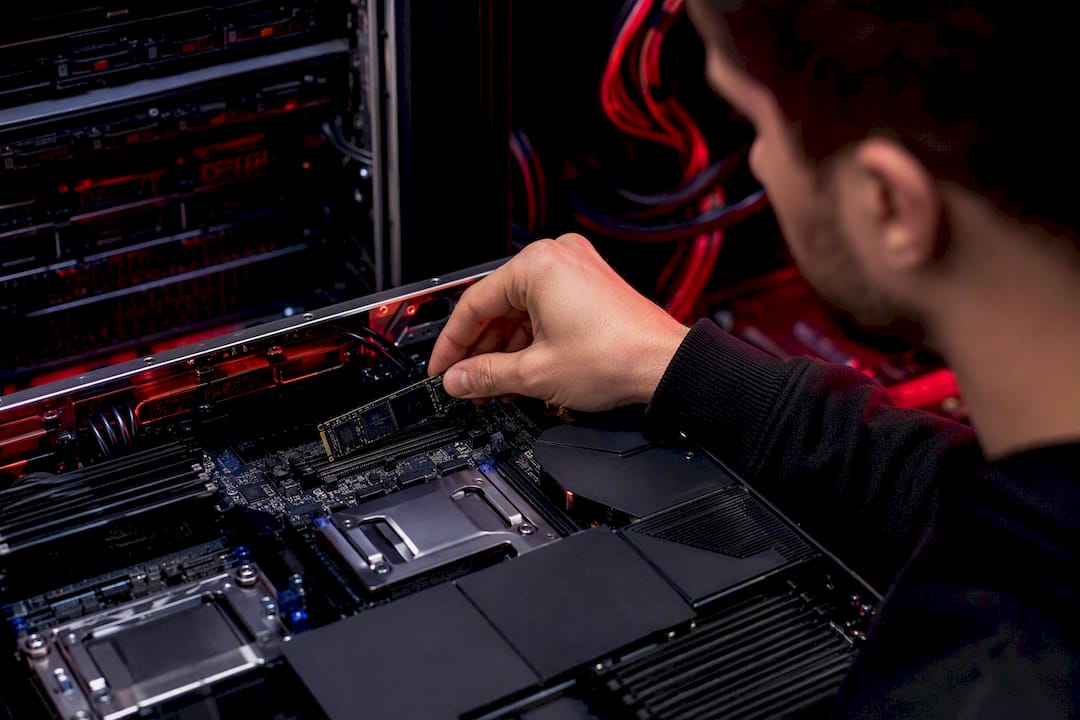
KVM vs VMware: Which Hypervisor Fits Your Stack in 2026?
For teams that prioritize cost, automation, and cloud-scale performance, KVM is generally the better fit. For teams that need turnkey management, validated compliance, and integrated HA/DRS out of the box, VMware still wins on convenience. That’s the whole verdict in one sentence, but the “kvm vs vmware” decision usually comes down to which constraint hurts your team more: budget and headcount, or time-to-deploy and vendor accountability.
Here’s how the two sides actually break down:
KVM tends to win when:
- You’re already running Linux and want to skip hypervisor licensing entirely
- Your team can script infrastructure with Ansible or Terraform instead of clicking through a GUI
- You’re building at cloud scale, where KVM already runs under most major public cloud platforms
VMware tends to win when:
- You need a single vendor to call when something breaks in a regulated environment
- Your ops team is small and depends on vCenter’s integrated HA, DRS, and vMotion instead of assembling those pieces separately
- You have existing compliance certifications built around ESXi and switching costs would outweigh the licensing savings
The sections below walk through architecture, real performance numbers, licensing math after Broadcom’s 2024 changes, and a migration checklist for anyone running both.
TL;DR:
- KVM offers cost savings and improved automation flexibility, especially for Linux-savvy teams, due to its zero licensing fees and open-source nature.
- Proper tuning of both hypervisors, including driver selection and configuration, is crucial for achieving optimal CPU and network performance.
- VMware’s recent shift to per-core subscription licensing significantly increases total ownership costs, making KVM more attractive for larger-scale deployments.
- KVM requires manual setup for compliance and high-availability features, whereas VMware provides integrated, GUI-driven management tools out of the box.
- Managed KVM services like AceRDP enable near-native performance and instant provisioning without demanding extensive Linux expertise from users.
Table of Contents
- KVM vs VMware Architecture: Kernel Module vs Microkernel
- How Does KVM vs VMware Performance Compare in Practice?
- What Does KVM vs VMware Cost Over Three Years?
- Managing KVM vs VMware Day to Day
- Which Platform Handles Security and Compliance Better?
- How Do You Migrate Between KVM and VMware?
- When Managed KVM Hosting Beats Building Your Own
- Our Take: The Conventional Wisdom Undersells KVM’s Maturity
- Get Production-Ready KVM Without Building the Stack Yourself
- Key Takeaways
- Sources
- FAQ
KVM vs VMware Architecture: Kernel Module vs Microkernel
The core technical difference explains almost everything else in this comparison. ESXi is a type-1 hypervisor built as a purpose-built microkernel that boots directly on hardware. It ships as a compact, vendor-controlled image with its own driver model, isolated from a general-purpose operating system. KVM works differently: it’s a kernel module that turns an existing Linux install into a hypervisor, paired with QEMU for device emulation and hardware virtualization instructions from Intel VT-x or AMD-V.
That distinction drives real operational consequences. ESXi’s hardware support depends on VMware’s Hardware Compatibility List, meaning your server, NIC, and storage controller need to appear on that list before VMware will support them. KVM inherits whatever hardware the Linux kernel already supports, which is a much wider net, including obscure network cards and storage HBAs that never made it onto any vendor’s certification list.
Device drivers follow a similar split. KVM guests typically use virtio drivers, a paravirtualized interface that Red Hat and the open-source community have optimized for near-native performance across CPU, disk, and network paths. VMware ships its own proprietary driver set (VMXNET3, PVSCSI) tuned specifically for ESXi’s kernel.
Storage formats diverge too, and this matters more than most admins expect during migration planning:
- KVM typically uses QCOW2 for snapshotting and thin provisioning, or RAW for maximum I/O throughput with less overhead
- VMware relies on VMDK files sitting on VMFS, or vSAN for hyperconverged deployments with built-in replication
- Converting between these formats during a migration is possible but not always lossless, especially around snapshot chains and thin-provisioning metadata
None of this makes one architecture objectively better. It means KVM rewards teams comfortable managing Linux internals, and ESXi rewards teams who want a sealed appliance they don’t have to think about.
How Does KVM vs VMware Performance Compare in Practice?
Raw numbers matter more here than opinions, so let’s start with what benchmarking actually shows. Independent comparisons report that KVM often matches or slightly exceeds ESXi on CPU and network efficiency, with CPU virtualization overhead landing in the 3 to 5 percent range when properly configured with virtio drivers. ESXi’s overhead tends to run somewhat higher depending on workload and configuration, though the gap narrows considerably with tuning on both sides.
On CPU: the difference mostly comes down to scheduler behavior and how well the guest OS understands it’s virtualized. KVM benefits from Linux’s mature CPU scheduler and cgroups, while ESXi’s proprietary scheduler handles NUMA-aware placement automatically with less manual tuning required.
On memory: both platforms support overcommit and ballooning, but KVM’s integration with Linux’s transparent huge pages gives administrators more direct control, at the cost of needing to actually configure it.
On disk I/O: this is where configuration choices swing results the most. A KVM guest running virtio-scsi against a RAW image on NVMe storage can approach bare-metal throughput. Guests using default QCOW2 settings without virtio, or ESXi VMs on VMFS without adjusting queue depth, will show noticeably worse numbers. Engineering analyses consistently find that driver stack and image format choices move the needle more than the hypervisor vendor itself.
On network: virtio-net paired with multiqueue support gets KVM most of the way to native throughput. For latency-sensitive workloads, SR-IOV and DPDK bypass the hypervisor’s software switch entirely on both platforms, though the setup path looks different: KVM exposes this through libvirt XML configuration, while VMware wraps it into vSphere’s networking UI.
Statistic Callout: Multiple independent benchmarks put KVM’s CPU virtualization overhead at roughly 3 to 5 percent versus a somewhat higher baseline for ESXi in comparable configurations, though actual results depend heavily on driver stack and workload type.
Pro Tip: Before comparing hypervisors on paper, run the same tuning checklist on both: pin vCPUs to physical cores for latency-sensitive workloads, enable hugepages for memory-intensive database VMs, switch to the deadline or none I/O scheduler on NVMe-backed hosts, and confirm you’re using virtio or PVSCSI drivers instead of emulated IDE. Skipping this step is the single biggest reason “kvm vs vmware performance” benchmarks vary wildly across the internet.
A practical tuning sequence looks like this:
- Confirm virtualization extensions (VT-x/AMD-V) and nested paging are enabled in firmware
- Switch guest disk controllers to virtio-scsi (KVM) or PVSCSI (VMware) instead of legacy emulated controllers
- Enable hugepages for workloads with heavy memory access patterns
- Pin vCPUs and isolate host cores for latency-sensitive guests
- Validate network throughput with multiqueue virtio-net or VMXNET3 before assuming a hypervisor-level bottleneck
What Does KVM vs VMware Cost Over Three Years?
Licensing is where this comparison has shifted the most since 2024. KVM itself carries no hypervisor license fee since it’s built into the Linux kernel, though most production deployments still pay for a supported enterprise distribution, backup tooling, or a management layer like a commercial Proxmox or oVirt-based platform. VMware’s model changed fundamentally after Broadcom’s acquisition: the free perpetual ESXi tier disappeared, and licensing moved to per-core subscription bundles that many organizations found significantly more expensive than their previous perpetual-license arrangements.
Statistic Callout: Broadcom’s 2024 restructuring of VMware licensing eliminated the free ESXi tier and shifted pricing to per-core subscription bundles, a change widely cited as the reason interest in KVM-based alternatives accelerated industry-wide.
Building an honest total cost of ownership model means looking past the license line item:
- Direct licensing: KVM has none; VMware now runs on mandatory per-core subscriptions with bundled feature tiers you may not need
- Support costs: enterprise Linux subscriptions (for KVM stacks) versus VMware’s support contracts, plus third-party backup and storage integration fees on both sides
- Staffing: KVM environments often need engineers comfortable with Linux internals and infrastructure-as-code; VMware environments can run leaner on Linux expertise but pay for that convenience in licensing
- Lock-in risk: VMware’s integrated stack (vSAN, NSX, vCenter) creates switching costs that compound over years; KVM’s open tooling reduces vendor lock-in but shifts integration work onto your team
A workable decision trigger: if you’re running under roughly 50 to 100 VMs with a lean ops team and no dedicated Linux automation expertise, VMware’s operational simplicity often still justifies the subscription cost. Past that scale, or with any existing DevOps maturity, the math tips toward KVM fast enough that recent licensing changes have genuinely accelerated migration conversations, though replacement success still depends on how ready your team is to own that automation layer.
Managing KVM vs VMware Day to Day
The daily experience of running each platform diverges sharply, and this is where a lot of teams underestimate the switch. vCenter gives you a single UI-driven console for HA, DRS, and vMotion, meaning a junior admin can drain a host, migrate live VMs, and rebalance a cluster without touching a command line. That’s a genuine advantage for smaller teams or shops without dedicated automation staff.
KVM takes an automation-first posture instead. There’s no single official console, so you assemble your management layer from libvirt for local control, Proxmox VE or oVirt for cluster-level GUIs, or OpenStack when you need full cloud-style orchestration. This isn’t a weakness so much as a different bet: KVM assumes you’ll manage infrastructure as code.
That assumption shows up in the ecosystem tooling available to each platform:
- Automation: both platforms integrate with Ansible and Terraform, but KVM’s automation story is generally deeper since libvirt exposes nearly everything through a scriptable API
- Monitoring: Prometheus exporters exist for both, though KVM’s Linux-native metrics (via libvirt-exporter or node_exporter) tend to be more granular out of the box
- Backup and snapshots: VMware’s vSphere APIs for Data Protection are the industry standard that most commercial backup vendors build against first; KVM relies on qemu-img snapshots and libvirt hooks, which work well but require more vendor-specific integration work for enterprise DR tooling
- High availability: vSphere HA and DRS are polished, GUI-driven features; KVM achieves equivalent outcomes through Pacemaker, corosync, or orchestration platforms like OpenStack, with more setup effort upfront
Staffing follows directly from this split. Scaling VMware mostly means adding headcount that knows vSphere. Scaling KVM means investing in engineers who can write and maintain the automation that VMware gives you built-in.
Which Platform Handles Security and Compliance Better?
ESXi’s smaller, purpose-built microkernel gives it a naturally reduced attack surface compared to running a hypervisor on top of a general-purpose Linux kernel with its much larger codebase. VMware also ships with vendor-supplied hardening guides and formal certifications that compliance auditors already recognize by name, which shortens audit conversations considerably.
KVM answers this with SELinux and sVirt, which apply mandatory access controls to isolate each guest’s process and resources at the kernel level. It’s a genuinely strong isolation model, but it doesn’t arrive pre-certified the way ESXi does. Getting a KVM stack to the point where a compliance team signs off usually means real configuration work, not just checking a box.
A few practical differences worth planning around:
- Patch cadence: KVM security depends on your Linux distribution’s kernel update cycle, which you control directly; ESXi patches come from VMware on their release schedule, giving you less control but more predictability
- Supply chain: KVM’s open-source nature means broader community scrutiny of code, but also more components to track across distro, QEMU, and libvirt versions
- Compliance readiness: KVM is production-ready for enterprise workloads and runs much of the public cloud, but reaching the same certified state as ESXi typically requires additional validation work
- Hardening baseline: apply CIS benchmarks to both platforms, enforce SELinux enforcing mode (not permissive) on KVM hosts, and lock down management plane access, whether that’s vCenter or your libvirt/Proxmox interface, behind a jump host or VPN
Neither platform is inherently insecure. The difference is who does the certification legwork, and when.
How Do You Migrate Between KVM and VMware?
Live migration works on both platforms, but the prerequisites and tooling diverge enough to catch teams off guard. VMware’s vMotion is deeply integrated into vCenter and handles shared-storage live migration with minimal manual setup. KVM’s equivalent, built on libvirt’s migration commands, works well but typically demands more explicit configuration around shared storage and network bridging before it behaves the same way.
Converting disk images is usually the first real obstacle. Moving a VMDK to QCOW2 or RAW is straightforward with qemu-img convert, but snapshot chains, thin-provisioning metadata, and guest tools (VMware Tools versus QEMU guest agent) all need separate handling or you’ll end up with a VM that boots but behaves oddly.
A phased approach avoids most of the pain:
- Run a pilot migration on a non-critical VM to validate disk conversion and driver compatibility
- Uninstall VMware Tools and install the QEMU guest agent (or vice versa) before finalizing the switch
- Remap network interfaces manually, since virtio-net and VMXNET3 device names won’t match automatically
- Run stateful application tests, not just a boot check, to confirm database and file-locking behavior survived the move
- Keep the original VM powered off but intact for a defined rollback window before decommissioning it
Watch for licensing entanglement too. If your source VMware environment carries feature dependencies, like vSAN replication or NSX network policies, those don’t translate automatically and need a redesign, not just a conversion.
When Managed KVM Hosting Beats Building Your Own
Running production KVM well requires real Linux and automation expertise. AceRDP built its Windows RDP and KVM VPS hosting specifically around AMD Ryzen infrastructure with NVMe storage, so customers get the performance advantages of KVM, near-native CPU efficiency and virtio-tuned I/O, without owning the underlying kernel patching, hardware compatibility checks, or libvirt automation stack themselves.

This matters most for workload profiles where provisioning speed and consistent CPU performance outweigh the appeal of building custom infrastructure from scratch: development environments that spin up and tear down constantly, automation workloads that need predictable single-core throughput, and remote desktop use cases where latency is the whole ballgame.
Hosted KVM tends to make sense when:
- Your team wants production-grade virtualization without hiring for deep Linux kernel expertise
- You need instant provisioning across multiple regions instead of racking hardware
- Predictable monthly costs matter more than the marginal savings of self-managed bare metal
Pro Tip: If you’re evaluating whether to self-host KVM or rent it, price out the engineering hours needed to maintain SELinux policies, patch cadence, and libvirt automation yourself. That labor cost is real, even when the software is free.
Our Take: The Conventional Wisdom Undersells KVM’s Maturity
Most comparisons frame this as a binary between “enterprise-grade VMware” and “scrappy open-source KVM,” and that framing is outdated. KVM already runs a meaningful share of the world’s public cloud infrastructure, which means the maturity gap that used to justify VMware’s price premium has narrowed considerably. The real question isn’t which hypervisor is more capable anymore. It’s which one matches your team’s actual skills.
Where conventional advice falls short is treating licensing cost as the whole decision. Broadcom’s 2024 changes get all the attention, but the bigger long-term factor is automation maturity. A team that already scripts its infrastructure will find KVM cheaper and just as capable. A team that doesn’t will spend the “savings” on hiring or consulting to build what vCenter already gives them for free.
Prioritize honestly assessing your team’s Linux and automation depth before you price out licenses. That answer, more than any benchmark number, tells you which platform actually fits.
— AceRDP
Get Production-Ready KVM Without Building the Stack Yourself
AceRDP gives you the performance case this entire comparison is built on, near-native CPU efficiency and virtio-tuned I/O, without requiring you to patch kernels, tune SELinux policies, or assemble your own libvirt automation layer. Every plan runs on AMD Ryzen processors with NVMe storage and DDR5 RAM, so the CPU and disk numbers discussed above translate directly into what you get on day one, not after weeks of tuning.
That matters most if you landed on KVM as the right architectural choice but don’t want to own the operational overhead of Linux patch cycles, hardware compatibility validation, or building HA yourself with Pacemaker and corosync. AceRDP handles provisioning, DDoS protection, and multi-location deployment (Netherlands and US) so your team can focus on the workload instead of the hypervisor underneath it.
If instant provisioning, predictable monthly costs, and skipping the infrastructure-build phase sound like what your team actually needs, check out AceRDP’s KVM VPS plans and spin up a server in minutes instead of racking hardware.
Navigating the KVM vs VMware Comparison Guide
KVM wins on cost and automation flexibility for Linux-fluent teams, while VMware wins on turnkey management and compliance readiness for teams that need a single vendor and integrated tooling.
| Point | Details |
|---|---|
| Architecture drives everything | ESXi’s microkernel design trades hardware flexibility for a smaller, vendor-certified attack surface; KVM’s kernel-module approach trades polish for broader Linux driver support. |
| Performance depends on tuning, not vendor | KVM typically runs 3 to 5 percent CPU overhead with virtio drivers, but misconfigured guests on either platform will underperform regardless of hypervisor. |
| Licensing shifted the calculus in 2024 | Broadcom’s per-core subscription model replaced VMware’s free ESXi tier, pushing many teams to seriously evaluate KVM-based alternatives. |
| Compliance takes more work on KVM | ESXi ships with vendor certifications recognized by auditors; KVM’s SELinux and sVirt controls are strong but need manual validation to reach the same status. |
| Managed KVM removes the build burden | AceRDP’s Ryzen-powered KVM VPS hosting delivers near-native performance and instant provisioning without requiring in-house Linux automation expertise. |
Sources
- KVM vs. VMware comparison — Red Hat
- Kernel-based Virtual Machine — Wikipedia
- KVM vs ESXi: Performance, Cost & Architecture Compared | DiskInternals
FAQ
What Are the Downsides of Using KVM?
KVM requires more hands-on Linux and automation expertise than VMware’s GUI-driven tools, and reaching the same level of formal compliance certification as ESXi typically takes additional configuration and validation work.
Why Are Some Companies Moving Away From VMware?
Broadcom’s 2024 licensing changes eliminated VMware’s free perpetual ESXi tier and moved pricing to per-core subscription bundles, a shift widely credited with accelerating interest in KVM-based alternatives.
Is KVM Better Than ESXi?
KVM often matches or slightly exceeds ESXi on CPU and network efficiency when properly tuned with virtio drivers, though ESXi still offers more polished built-in management and validated hardware compatibility out of the box.
Who Is VMware’s Biggest Competitor?
KVM is VMware’s most prominent open-source alternative, given its integration into the Linux kernel and widespread use across public cloud infrastructure; hosted KVM providers like AceRDP let teams get KVM’s performance without managing the underlying stack themselves.